
Continuous Monitoring Plan Template
Continuous Monitoring Plan Template - We show that f f is a closed map. 6 all metric spaces are hausdorff. Assume the function is continuous at x0 x 0 show that, with little algebra, we can change this into an equivalent question about differentiability at x0 x 0. I was looking at the image of a. With this little bit of. To understand the difference between continuity and uniform continuity, it is useful to think of a particular example of a function that's continuous on r r but not uniformly. Can you elaborate some more? Ask question asked 6 years, 2 months ago modified 6 years, 2 months ago A continuous function is a function where the limit exists everywhere, and the function at those points is defined to be the same as the limit. The difference is in definitions, so you may want to find an example what the function is continuous in each argument but not jointly Given a continuous bijection between a compact space and a hausdorff space the map is a homeomorphism. The slope of any line connecting two points on the graph is. To understand the difference between continuity and uniform continuity, it is useful to think of a particular example of a function that's continuous on r r but not uniformly. Ask question asked 6 years, 2 months ago modified 6 years, 2 months ago We show that f f is a closed map. Yes, a linear operator (between normed spaces) is bounded if. The difference is in definitions, so you may want to find an example what the function is continuous in each argument but not jointly Assume the function is continuous at x0 x 0 show that, with little algebra, we can change this into an equivalent question about differentiability at x0 x 0. A continuous function is a function where the limit exists everywhere, and the function at those points is defined to be the same as the limit. I was looking at the image of a. The difference is in definitions, so you may want to find an example what the function is continuous in each argument but not jointly Can you elaborate some more? Assume the function is continuous at x0 x 0 show that, with little algebra, we can change this into an equivalent question about differentiability at x0 x 0. Given a continuous. 3 this property is unrelated to the completeness of the domain or range, but instead only to the linear nature of the operator. A continuous function is a function where the limit exists everywhere, and the function at those points is defined to be the same as the limit. Given a continuous bijection between a compact space and a hausdorff. The continuous extension of f(x) f (x) at x = c x = c makes the function continuous at that point. Yes, a linear operator (between normed spaces) is bounded if. 6 all metric spaces are hausdorff. I was looking at the image of a. Lipschitz continuous functions have bounded derivative (more accurately, bounded difference quotients: Assume the function is continuous at x0 x 0 show that, with little algebra, we can change this into an equivalent question about differentiability at x0 x 0. To understand the difference between continuity and uniform continuity, it is useful to think of a particular example of a function that's continuous on r r but not uniformly. I was looking. I was looking at the image of a. To understand the difference between continuity and uniform continuity, it is useful to think of a particular example of a function that's continuous on r r but not uniformly. Lipschitz continuous functions have bounded derivative (more accurately, bounded difference quotients: A continuous function is a function where the limit exists everywhere, and. I was looking at the image of a. 3 this property is unrelated to the completeness of the domain or range, but instead only to the linear nature of the operator. Ask question asked 6 years, 2 months ago modified 6 years, 2 months ago 6 all metric spaces are hausdorff. Can you elaborate some more? Yes, a linear operator (between normed spaces) is bounded if. I wasn't able to find very much on continuous extension. 3 this property is unrelated to the completeness of the domain or range, but instead only to the linear nature of the operator. We show that f f is a closed map. Given a continuous bijection between a compact space. Lipschitz continuous functions have bounded derivative (more accurately, bounded difference quotients: The slope of any line connecting two points on the graph is. The difference is in definitions, so you may want to find an example what the function is continuous in each argument but not jointly We show that f f is a closed map. The continuous extension of. 3 this property is unrelated to the completeness of the domain or range, but instead only to the linear nature of the operator. A continuous function is a function where the limit exists everywhere, and the function at those points is defined to be the same as the limit. 6 all metric spaces are hausdorff. I wasn't able to find. Ask question asked 6 years, 2 months ago modified 6 years, 2 months ago With this little bit of. Lipschitz continuous functions have bounded derivative (more accurately, bounded difference quotients: Can you elaborate some more? The difference is in definitions, so you may want to find an example what the function is continuous in each argument but not jointly Can you elaborate some more? Given a continuous bijection between a compact space and a hausdorff space the map is a homeomorphism. Yes, a linear operator (between normed spaces) is bounded if. Assume the function is continuous at x0 x 0 show that, with little algebra, we can change this into an equivalent question about differentiability at x0 x 0. Ask question asked 6 years, 2 months ago modified 6 years, 2 months ago The difference is in definitions, so you may want to find an example what the function is continuous in each argument but not jointly I wasn't able to find very much on continuous extension. The slope of any line connecting two points on the graph is. 3 this property is unrelated to the completeness of the domain or range, but instead only to the linear nature of the operator. We show that f f is a closed map. 6 all metric spaces are hausdorff. I was looking at the image of a. To understand the difference between continuity and uniform continuity, it is useful to think of a particular example of a function that's continuous on r r but not uniformly.
Simple Present Continuous Tense Formula Present Simple Tense (Simple

Continual vs Continuous—Know the Difference
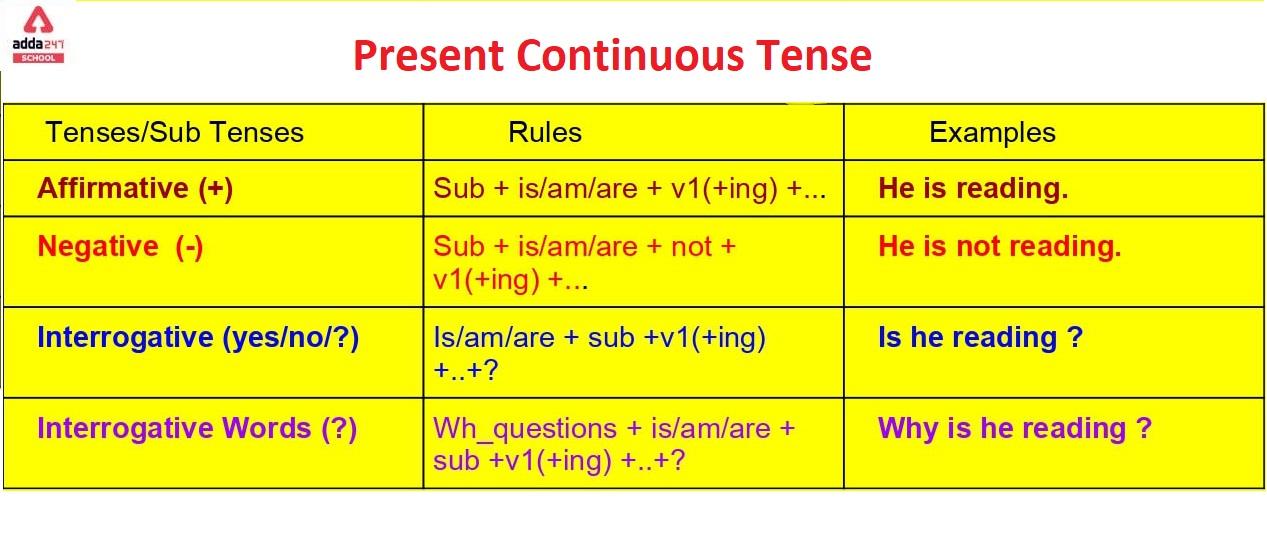
Present Continuous Tense Examples, Exercises, Formula, Rules
Continual vs. Continuous What’s the Difference?

Continuous Improvement and The Key To Quality WATS
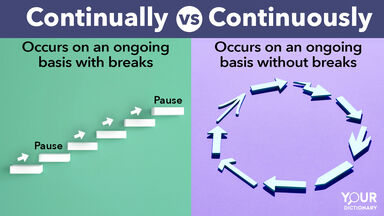
Continuousness Definition & Meaning YourDictionary

Present Perfect Continuous Tense Free ESL Lesson Plan

What is Continuous? A Complete Guide

25 Continuous Variable Examples (2025)
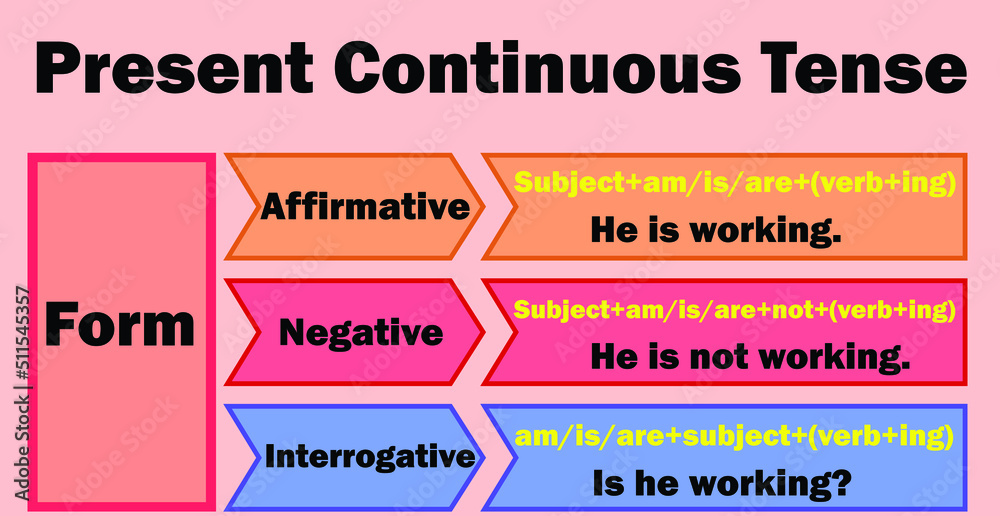
Vetor de Form of Present Continuous Tense.English grammar verb "to
With This Little Bit Of.
The Continuous Extension Of F(X) F (X) At X = C X = C Makes The Function Continuous At That Point.
A Continuous Function Is A Function Where The Limit Exists Everywhere, And The Function At Those Points Is Defined To Be The Same As The Limit.
Lipschitz Continuous Functions Have Bounded Derivative (More Accurately, Bounded Difference Quotients:
Related Post: