
Tabular Template
Tabular Template - Instead, use a tabularx or a tabular* environment to set the overall width to, say, \linewidth. Why are you forcing a line break and adding 4mm of space after the table? Ask question asked 8 years, 7 months ago modified 6 years ago This places all the content (tabular and your caption) in a minipage environment of width \textwidth. Most examples i've seen are like this: The second option does not appear to work. That way, you'll avoid getting wildly inconsistent font sizes across tables. The text inside a column of the tabular is padded, on both sides, with \tabcolsep. The minipage will ensure that the contents remains in a fixed block (so that your. I would like to include a tabular environment without using floats, but centering it. Why are you forcing a line break and adding 4mm of space after the table? \begin{tabular}{@{}l r r@{}} that is, with one @{} to the left of first column specifier and another @{} to the right of the last column specifier. I would like to include a tabular environment without using floats, but centering it. Instead, use a tabularx or a tabular* environment to set the overall width to, say, \linewidth. When we put @{}, this space is removed. What is the difference between tabular, tabular* and tabularx environments? The second option does not appear to work. The minipage will ensure that the contents remains in a fixed block (so that your. In my table, in order to have texts centered in each cell, i am using \\newcolumntype{p}[1]{>{\\centering\\arraybackslash}p{#1}} and instead of a simple. That way, you'll avoid getting wildly inconsistent font sizes across tables. Instead, use a tabularx or a tabular* environment to set the overall width to, say, \linewidth. Inside tabular and array environments, for. \\ should only be used to break lines in very specific contexts: I would like to include a tabular environment without using floats, but centering it. When we put @{}, this space is removed. Inside tabular and array environments, for. \\ should only be used to break lines in very specific contexts: When we put @{}, this space is removed. This places all the content (tabular and your caption) in a minipage environment of width \textwidth. What is the difference between tabular, tabular* and tabularx environments? This places all the content (tabular and your caption) in a minipage environment of width \textwidth. What is the difference between tabular, tabular* and tabularx environments? \begin{tabular}{@{}l r r@{}} that is, with one @{} to the left of first column specifier and another @{} to the right of the last column specifier. The second option does not appear to work.. The text inside a column of the tabular is padded, on both sides, with \tabcolsep. \\ should only be used to break lines in very specific contexts: Ask question asked 8 years, 7 months ago modified 6 years ago In my table, in order to have texts centered in each cell, i am using \\newcolumntype{p}[1]{>{\\centering\\arraybackslash}p{#1}} and instead of a simple.. When we put @{}, this space is removed. What is the difference between tabular, tabular* and tabularx environments? In my table, in order to have texts centered in each cell, i am using \\newcolumntype{p}[1]{>{\\centering\\arraybackslash}p{#1}} and instead of a simple. Most examples i've seen are like this: Inside tabular and array environments, for. Inside tabular and array environments, for. In my table, in order to have texts centered in each cell, i am using \\newcolumntype{p}[1]{>{\\centering\\arraybackslash}p{#1}} and instead of a simple. This places all the content (tabular and your caption) in a minipage environment of width \textwidth. What is the difference between tabular, tabular* and tabularx environments? Why are you forcing a line break. I would like to include a tabular environment without using floats, but centering it. What is the difference between tabular, tabular* and tabularx environments? \begin{tabular}{@{}l r r@{}} that is, with one @{} to the left of first column specifier and another @{} to the right of the last column specifier. Inside tabular and array environments, for. The second option does. In my table, in order to have texts centered in each cell, i am using \\newcolumntype{p}[1]{>{\\centering\\arraybackslash}p{#1}} and instead of a simple. I would like to include a tabular environment without using floats, but centering it. The second option does not appear to work. The text inside a column of the tabular is padded, on both sides, with \tabcolsep. \begin{tabular}{@{}l r. This places all the content (tabular and your caption) in a minipage environment of width \textwidth. \begin{tabular}{@{}l r r@{}} that is, with one @{} to the left of first column specifier and another @{} to the right of the last column specifier. \\ should only be used to break lines in very specific contexts: The text inside a column of. Instead, use a tabularx or a tabular* environment to set the overall width to, say, \linewidth. Most examples i've seen are like this: What is the difference between tabular, tabular* and tabularx environments? The minipage will ensure that the contents remains in a fixed block (so that your. That way, you'll avoid getting wildly inconsistent font sizes across tables. \\ should only be used to break lines in very specific contexts: \begin{tabular}{@{}l r r@{}} that is, with one @{} to the left of first column specifier and another @{} to the right of the last column specifier. The text inside a column of the tabular is padded, on both sides, with \tabcolsep. Why are you forcing a line break and adding 4mm of space after the table? Inside tabular and array environments, for. That way, you'll avoid getting wildly inconsistent font sizes across tables. Ask question asked 8 years, 7 months ago modified 6 years ago This places all the content (tabular and your caption) in a minipage environment of width \textwidth. What is the difference between tabular, tabular* and tabularx environments? Instead, use a tabularx or a tabular* environment to set the overall width to, say, \linewidth. The minipage will ensure that the contents remains in a fixed block (so that your. In my table, in order to have texts centered in each cell, i am using \\newcolumntype{p}[1]{>{\\centering\\arraybackslash}p{#1}} and instead of a simple.
PowerPoint Tabular Matrix Design SlideModel
Tabular Matrix Keynote Template Nulivo Market
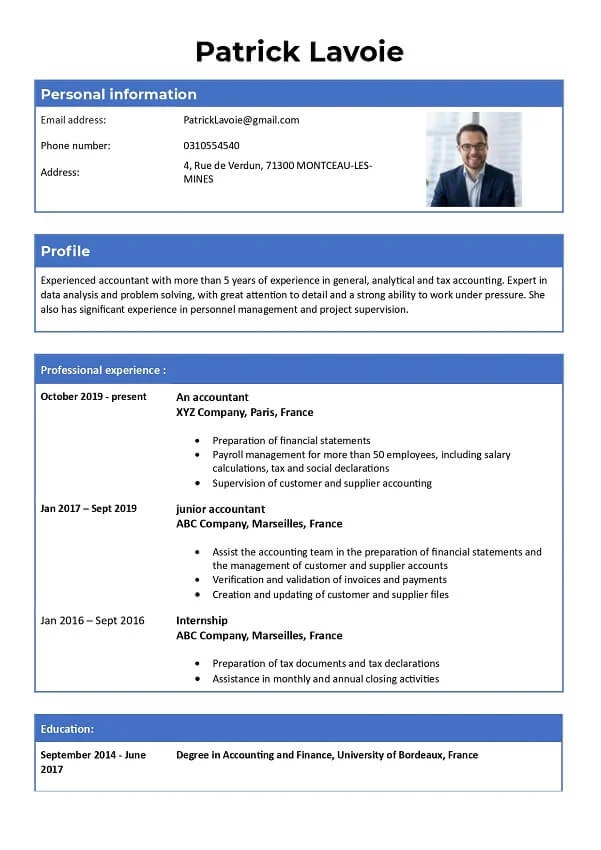
Tabular CV template GetYourCV
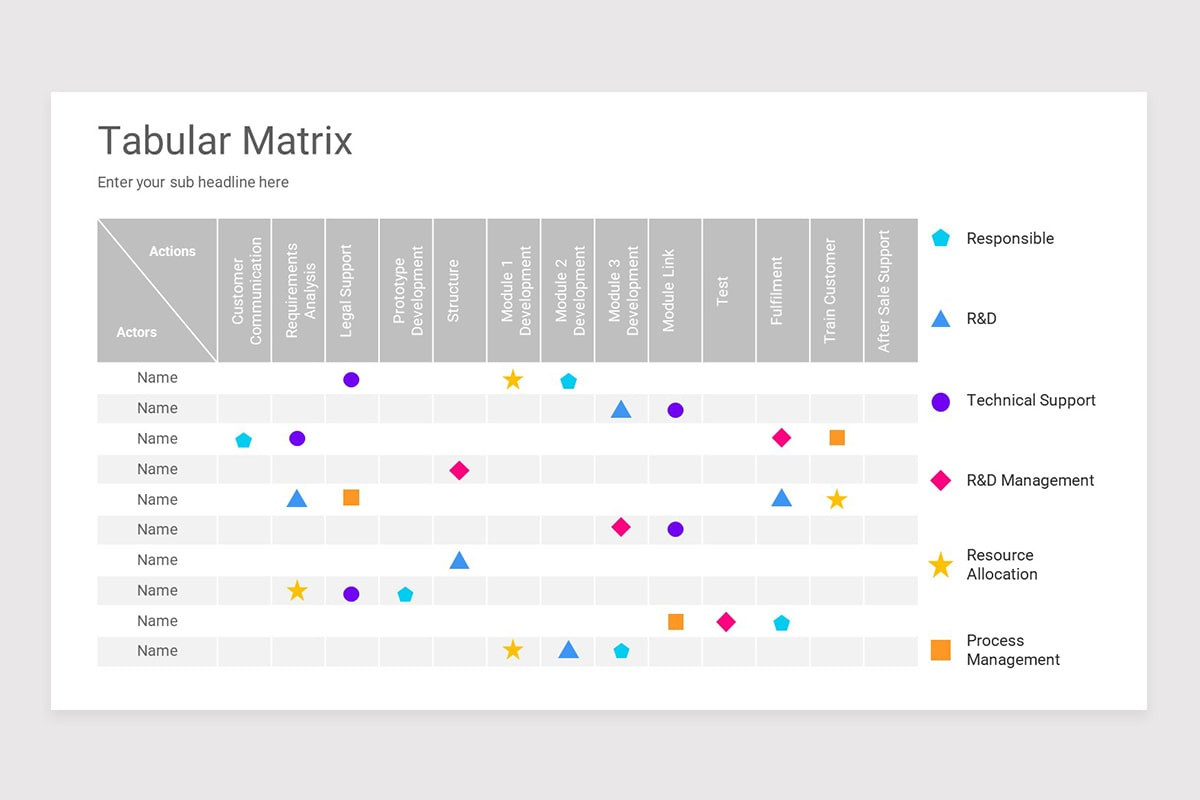
Tabular Matrix Keynote Template Nulivo Market
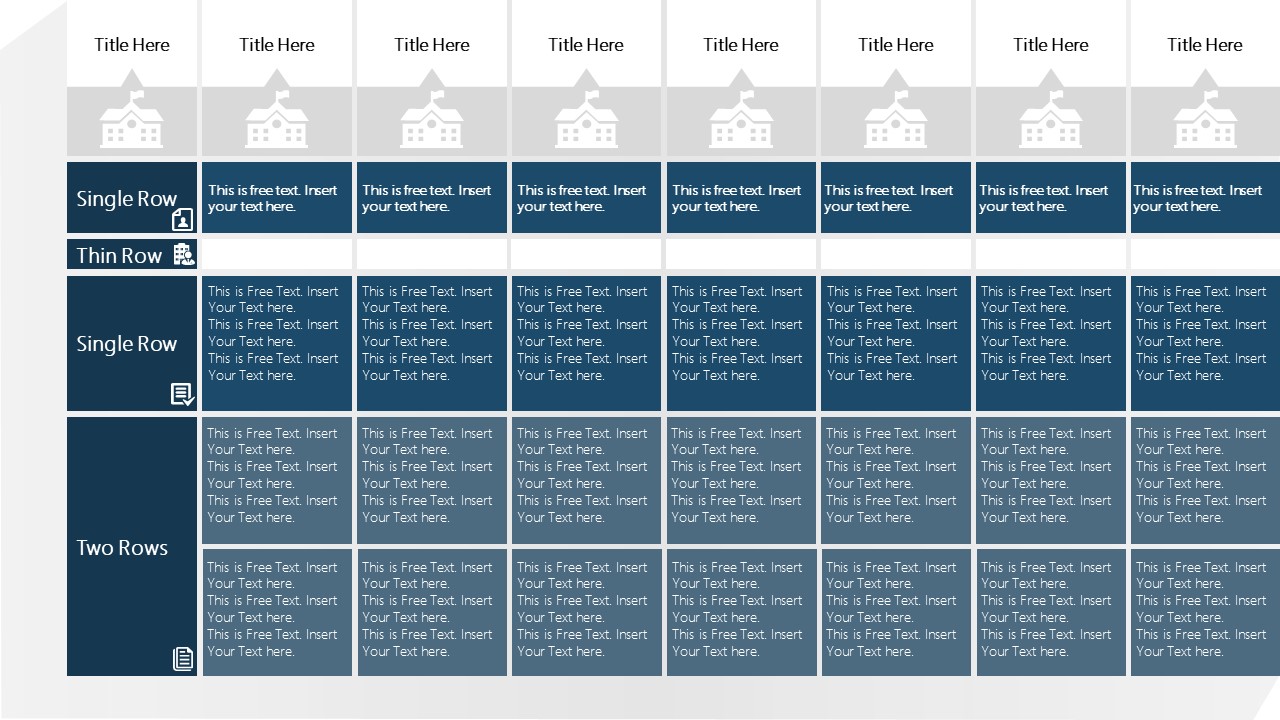
Flat Tabular Matrix PowerPoint Template SlideModel
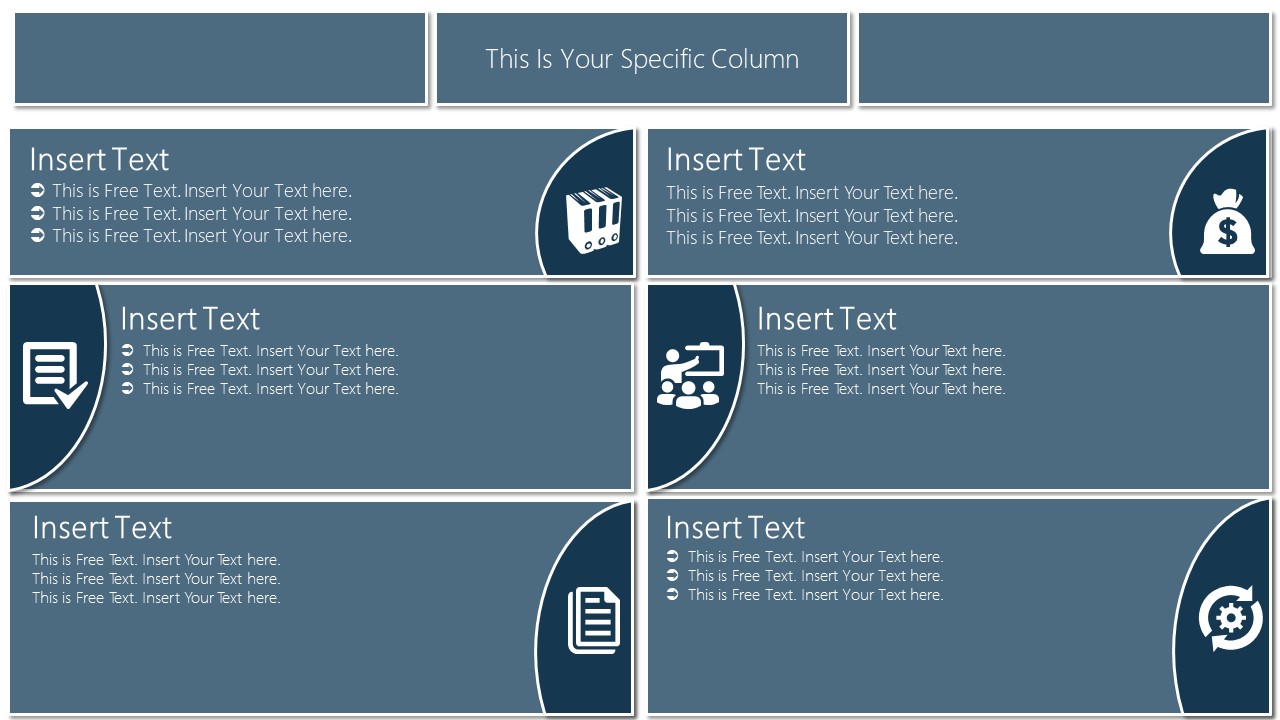
Flat Tabular Matrix PowerPoint Template SlideModel

Tabular Matrix Keynote Template Nulivo Market

Cv in tabular form template feetdoor
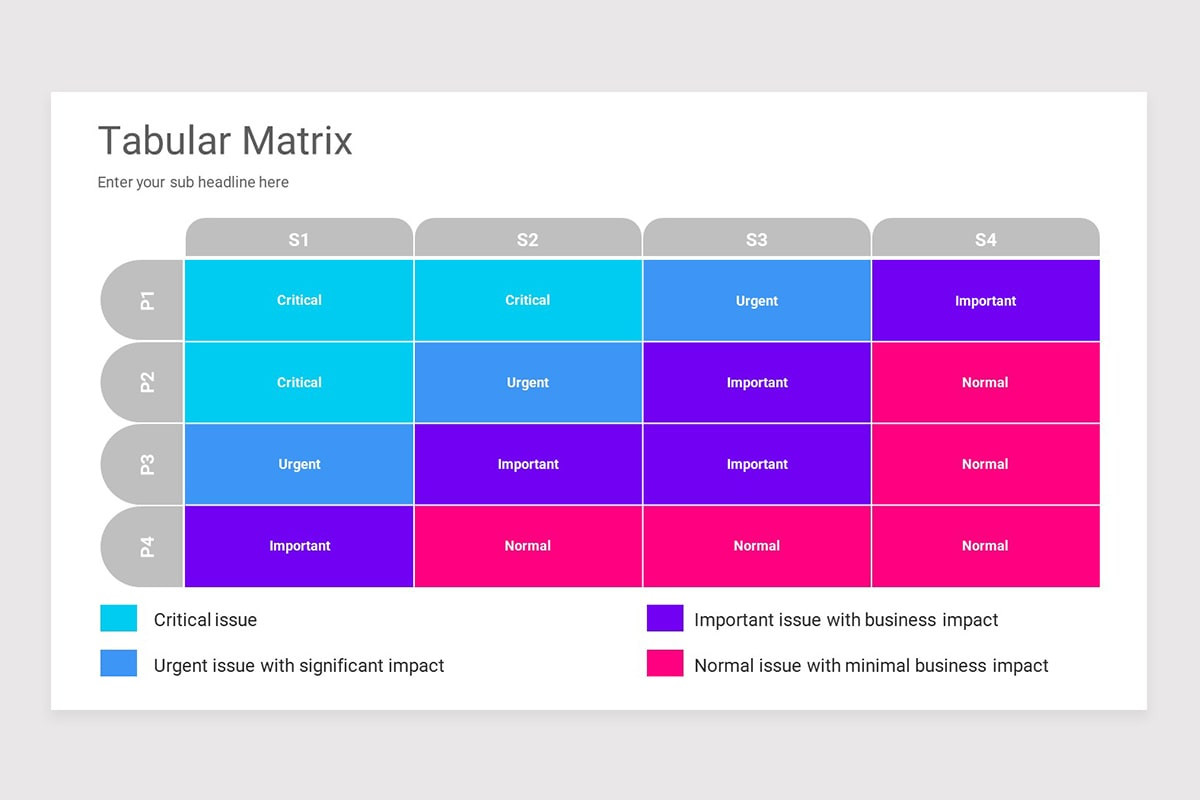
Tabular Matrix Keynote Template Nulivo Market
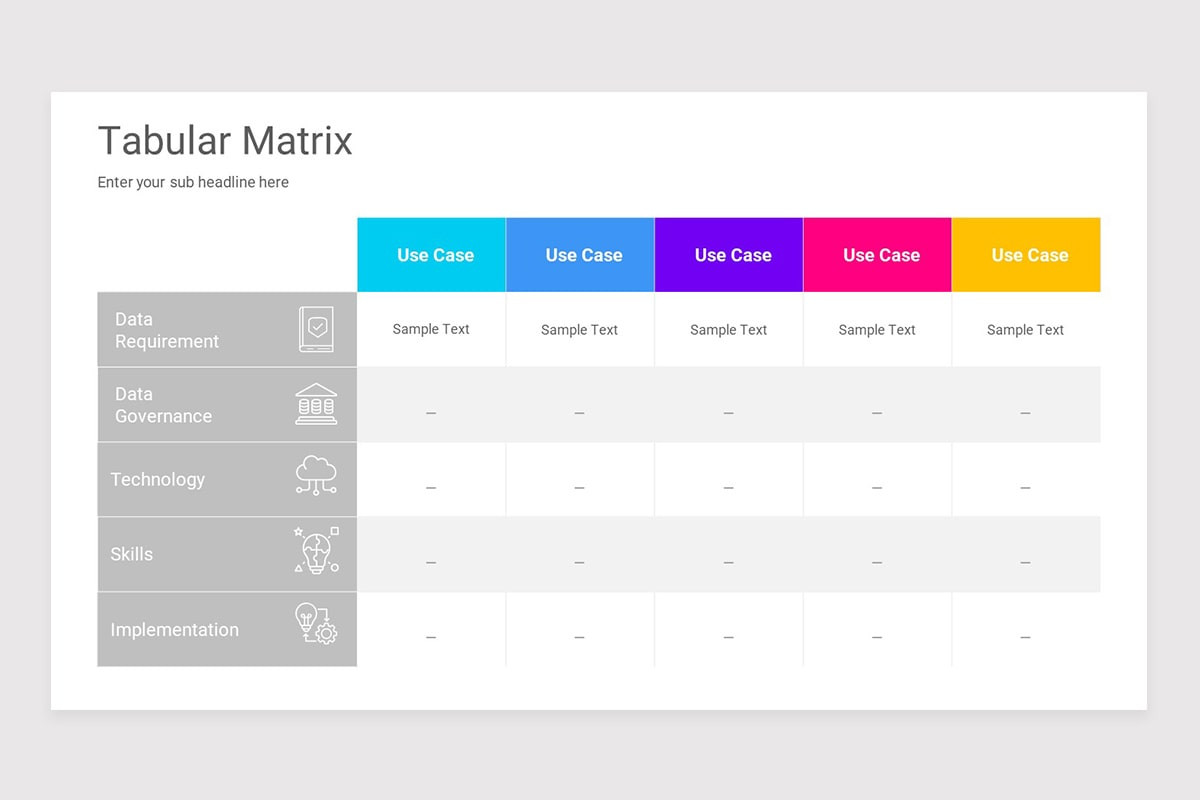
Tabular Matrix Keynote Template Nulivo Market
The Second Option Does Not Appear To Work.
I Would Like To Include A Tabular Environment Without Using Floats, But Centering It.
When We Put @{}, This Space Is Removed.
Most Examples I've Seen Are Like This:
Related Post: